Summary
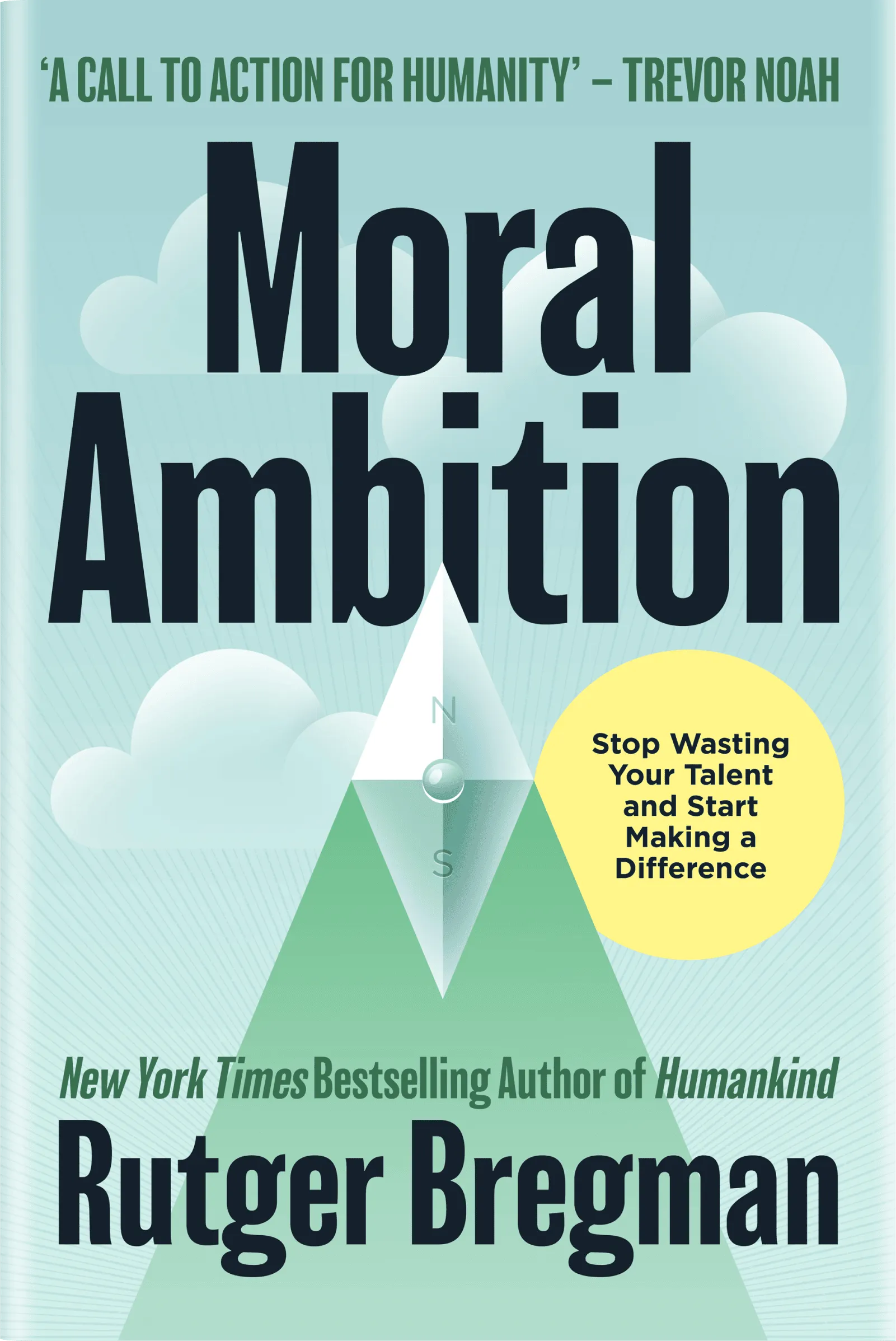
Rutger Bregman thinks you should be doing more with your life. If you are smart and ambitious but you're working a menial job for one of the corporate monopolists literally what are you doing? With points illustrated with anecdotes throughout history Bregman effectively makes the case for using ambition and privilege as a force for good. "We live in revolutionary times" and there has never been a better time to do something about it.
I've rated this book a 4.75. It felt like sitting down with one of your sanest friends and having a real heart to heart about how the world works and what to do about it. I appreciated the weaving of history and story throughout the chapters and how the same anecdotes kept cropping up as examples. I loved learning about figures I'd never heard about who were inspirational in heroic movements. I wouldn't be surprised if by the end of this year the book ticks up to a whole 5 stars from me. I have a feeling this one will be swimming around in my head for a while.
The Best Bits
Lower your threshold for taking action
Bregman highlights the bravery and action of Arnold Douwes who was a superspreader of change in the town of Nieuwlande during WWII. Bregman uses this example to illustrate the idea that everyone has a threshold to act after which point they will begin to take action. There are some special people in the world that act without prompting and have a threshold of 0 and others who need at least one, two, ... n other people to act before they are moved (threshold value of n). So this chapter was all about how to lower your own value by surrounding yourself with morally ambitious people and about how to lower others' value by reaching out and asking them to help.
See winning as your moral duty
The importance of being realistic and ruthless in the pursuit of a better world. The importance of being heavily focused in the doing and not in the perfectionism of being "good." It is in this chapter that Bregman also gives us The Five Myths about how change works:
- The Illusion of Awareness
"... awareness is overrated. The fact that people are aware of various injustices doesn't mean they'll act on that knowledge"
"Most news junkies who consider themselves 'politically engaged' don't do anything remotely resembling true political activity. Sure, they vote every few years, maybe sign a petition every now and then, but that's about it. ... Politics as pastime. It has little to do with lobbying, protesting, organizing, or mobilizing - the building blocks of democratic power."
- The Illusion of Good Intentions
Good intentions are not enough - especially if they end up being not effective. If you raise money for a charity but that charity doesn't actually effectively solve the problem it intended to solve then really what is the point.
- The Illusion of the Right Reasons
Also known as "the road to hell is paved with good intentions." The right thing often happens for the wrong reasons and if the end goal is what you're fighting for then be realistic about how to get as many people on that bandwagon as possible. This point really resonated with me and the examples given were fascinating to learn about. One example was of Thomas Clarkson's argument that the slave trade was harmful to the sailors on the boats was effective to a wider audience even though the suffering of the guards was nothing compared to those of the captives. Honestly this point is pretty timely right now. The other night I came across a reddit post from Matt Dinniman in the Dungeon Crawler Carl subreddit that struck me as an illustration of holding out for this point.
- The Illusion of Purity
The understanding that effective coalitions are made up of people who disagree with each other. If we are more focused on making sure everyone around us has the right opinion on something than actually making incremental changes for the better then what exactly are we doing here? Have a focus and focus on it. If there are other things that need doing then another organization and another focus can be started. We can't all do everything perfectly. We have to all be doing good things imperfectly. And there is room for us all.
- The Illusion of Synergy
This one is very similar to the one above - focus on one thing at a time and let good things happen incrementally as opposed to having an all or nothing view of saving the world.
"The risk of an all-or-nothing approach is that you shoot for the moon, then don't even get off the ground.
According to Dr King the serious progressive "recognizes that social change will not come overnight, yet he works as though it is an imminent possibility."
Save a Life, now only $4,999!
I have my own qualms with Effective Altruism but this so wonderfully wraps up the issue I had with it at its core:
At the height of the Occupy Wall Street protests in 2011, William MacAskill even managed to give a talk at Oxford titled "Want an ethical career? Become a banker." Okay, I thought, so you guys want to steal from the poor to give to the poorest? And you think that after a few years on Wall Street you'll still want what's best for the world?
Expand Your Moral Circle
In which Bregman breaks down how to identify injustices in the world and what needs the most doing and how to determine whether or not you are on the right side of history. I really liked his 6 signs a common practice might be wrong:
- We've long heard what's wrong with it
- We say, "That's just the way it is"
- We avoid uncomfortable facts about the practice
- We ridicule its opponents
- We find it hard to justify it to our children
- We suspect future generations will see it as barbaric
The Point
History doesn't do things; people do things. If there's fairness in this world, it has to come from us.